The Vendor Contract Your CRO Sent You Was Written to Protect Them, Not Your Data
 W. Osei
You found a contract research organization that understands your technology. They quoted a reasonable timeline. They've done work in your space before. You're relieved. So you sign the contract they sent over, because frankly you have seventeen other fires burning and the legal review budget is already stretched.
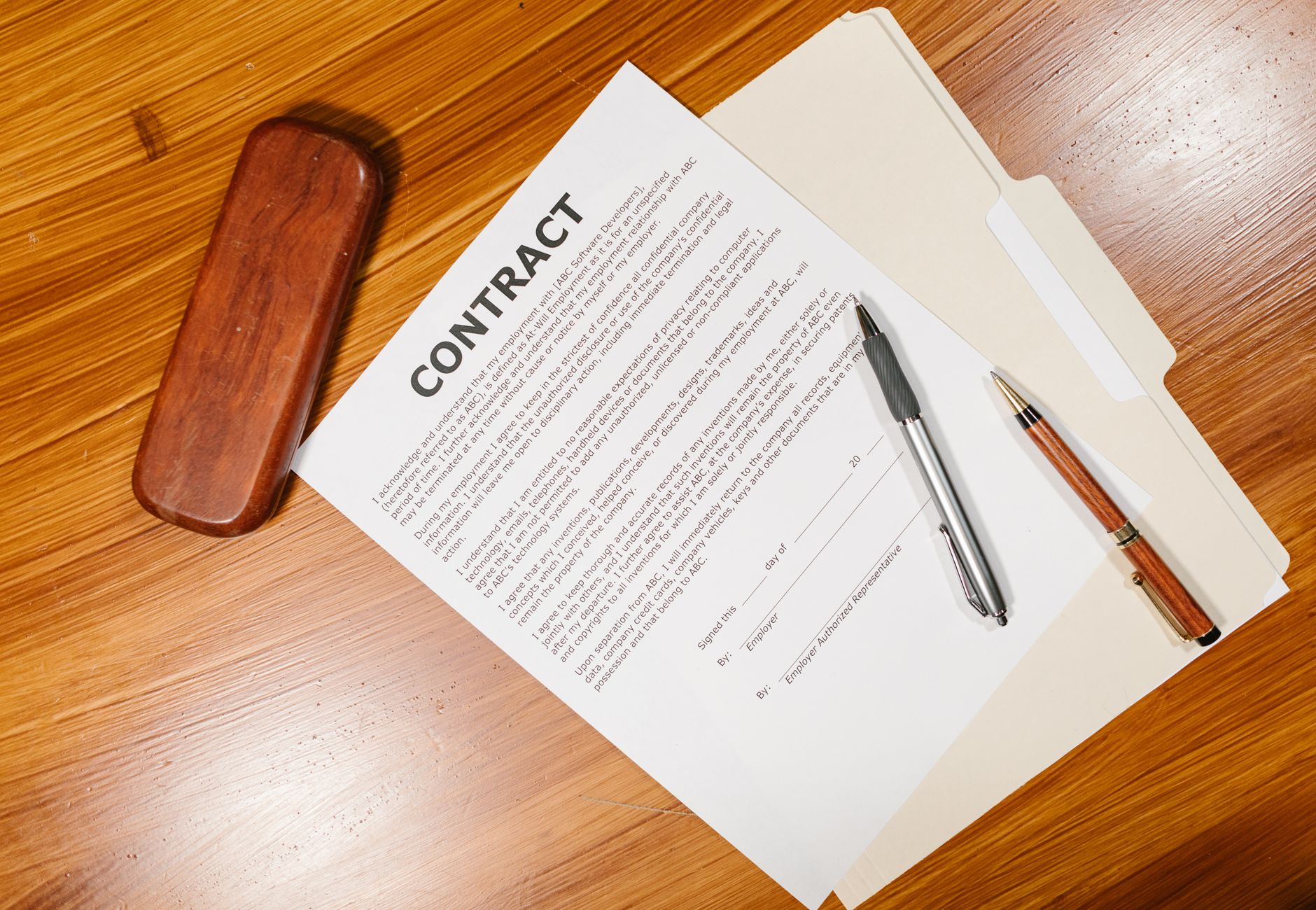 Photo by RDNE Stock project on Pexels.
That contract was written by their lawyers. For their protection. Across hundreds of clients, most of whom never read past the scope of work.
Here's what's buried in the boilerplate.
The IP ownership clause is almost certainly ambiguous.
Most CRO agreements include language granting the CRO a license to "use data generated under this agreement for internal purposes, including improvement of services." Read that again. Your proprietary assay results, your failure modes, your compound performance data: all of it potentially feeding their internal knowledge base. The clause rarely says "aggregate" or "anonymized." It says internal purposes. That phrase does a lot of work.
If you're a medtech or biotech startup, that data is your moat. Surrendering a license to it in exchange for contract research is a bad trade you made accidentally.
Publication rights are the second landmine.
Some CRO agreements include a clause permitting the CRO to publish findings from the study after a embargo period, typically 12 to 24 months. This matters enormously if you haven't filed your IP yet. A publication by your CRO, even a poster at a conference, can constitute prior art. Your patent application, filed after that publication, is suddenly weaker or invalid. The CRO didn't do this maliciously. They have academic staff who want to publish. But the result is the same.
Check your agreement for any language about "scientific communication," "publication rights," or "CRO authorship." If those words appear, you need a redline before you sign.
Force majeure is broader than you think.
Post-2020, every CRO contract has an expanded force majeure clause. Pandemic-era legal teams added supply chain disruptions, staffing shortages, and regulatory delays to the list of events that excuse performance. Which sounds reasonable until your timeline slips six months and you're told the delay falls under force majeure provisions. You have no recourse. Your investor milestone is blown. Your bridge conversation just got harder.
Negotiate a carve-out: force majeure cannot excuse delays in deliverables where the CRO had prior written notice of your timeline constraints. Get it in writing. They'll push back. Push back harder.
Liability caps are set to protect them from you, not from each other.
Standard CRO agreements cap liability at the total fees paid under the contract. If you paid $200,000 for a study and they deliver contaminated samples or botched analytical data six months before your Series A, your maximum recovery is $200,000. The cost of repeating the study, the delay to your fundraise, the lost partnership opportunity: none of that is recoverable. You signed it away on page 14.
Here's what a reasonable negotiation looks like before you sign:
graph TD
    A[Receive CRO Contract] --> B{Internal Review}
    B --> C[Flag IP Ownership Clauses]
    B --> D[Flag Publication Rights]
    B --> E[Flag Force Majeure Scope]
    B --> F[Flag Liability Cap]
    C --> G(Send Redline to CRO)
    D --> G
    E --> G
    F --> G
    G --> H{CRO Accepts Changes?}
    H --> I[Execute Agreement]
    H --> J[Escalate or Walk]
This is not a complex negotiation. CROs do this constantly. A well-run CRO will have seen these redlines before and will accept most of them. A CRO that refuses to negotiate any of these terms on a six-figure engagement is showing you something about how they operate.
One practical move most founders skip: ask for the data ownership clause to explicitly state that all raw data, processed data, study reports, and derivative analyses are owned solely by your company, with no license granted to the CRO for any purpose. Make them add that sentence. If their template doesn't have it, that omission was intentional.
Your CRO relationship is a vendor relationship. Treat it like one. The person who sent you the contract is not your collaborator yet. They become a collaborator after you've both signed something fair.
Read the contract. All of it. Pay a lawyer $500 to review it if you won't read it yourself. That $500 is the cheapest insurance you'll buy this year.
Get Lab to Launch in your inbox
New posts delivered directly. No spam.
No spam. Unsubscribe anytime.