The Non-Disclosure Agreement Your Potential Partner Sent You Is a Trap
 W. Osei
Somebody at a large corporation asked to see your technology. You were flattered. They sent over an NDA before the meeting, you skimmed it, and you signed because the meeting felt more important than the paperwork.
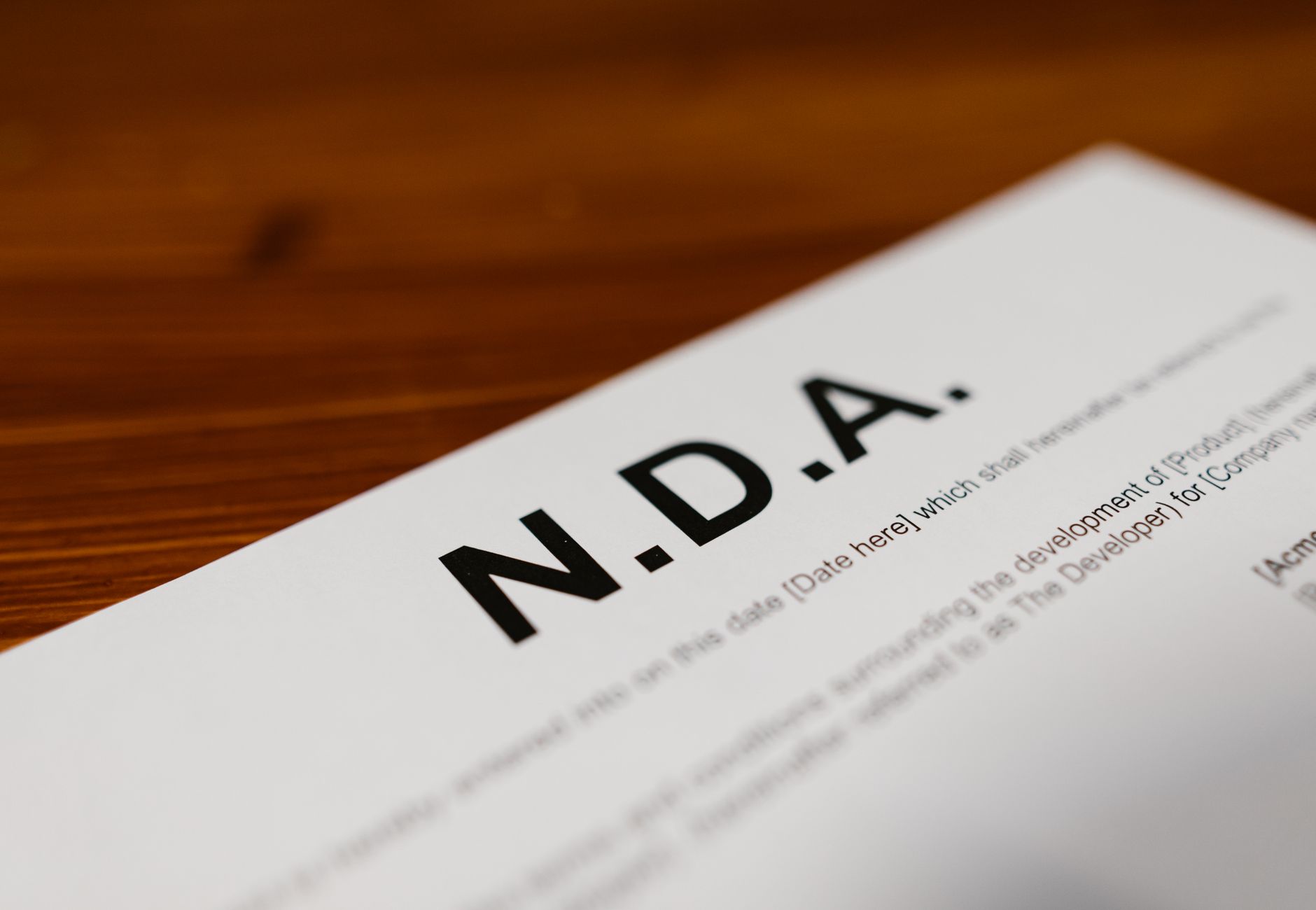 Photo by RDNE Stock project on Pexels.
This is how founders lose control of their most valuable assets before they even realize a negotiation started.
NDAs from large corporate partners are rarely malicious by design. They're written by in-house legal teams who protect the corporation's interests as a matter of routine. Nobody sat in a boardroom plotting to capture your IP. But the outcome can look identical to theft, and "we didn't mean to" won't help you recover.
Here's what's actually hiding in those documents.
The Residuals Clause
Search the NDA for the word "residuals." If you find it, read that paragraph three times. A residuals clause typically allows the receiving party to use any information that employees retain in their unaided memory, even after the agreement expires. In practice, this means an engineer who sits through your demo can go back to their desk and build a version of what you showed them, as long as they don't refer to your written materials directly. Courts have interpreted this broadly. Your oral presentation, your live demo, your casual explanation of how the process works: all potentially fair game.
Some corporations include residuals clauses as standard boilerplate. Others insert them deliberately when they're evaluating whether to build or buy. You won't know which situation you're in until it's too late.
One-Way vs. Mutual: The Asymmetry That Hurts You
Partner-issued NDAs are almost always one-directional. You agree to protect their confidential information; they agree to protect yours. Symmetric on its face. But scroll down to the definition of "Confidential Information." Corporate NDAs frequently carve out broad exclusions: anything the receiving party can show was independently developed, anything in the public domain, anything learned from a third party.
Prove independent development happened? Nearly impossible. They have hundreds of engineers and a decade of internal documentation. You have a 12-person team and a Notion workspace.
The exclusions that seem reasonable in the abstract become weapons in a dispute.
The Term and Survival Provisions
A two-year NDA feels short when you're a pre-revenue startup moving slowly through a pilot. Check whether the confidentiality obligations survive termination and for how long. Some agreements protect information for two years total; others protect it for two years after termination of the agreement, which is different. A few roll over automatically. If your technology won't be commercially deployed until year three and the protection lapses at year two, you have a window of exposure right when your work becomes valuable enough to steal.
What You Should Actually Do
Before you sign anything from a corporate partner, run through this basic sequence:
graph TD
    A[Receive partner NDA] --> B{Find residuals clause?}
    B -->|Yes| C[Request deletion or narrow scope to written materials only]
    B -->|No| D{Review exclusions to Confidential Information}
    C --> D
    D --> E{Check NDA term vs. your commercialization timeline}
    E --> F[Redline and return; do not sign as-is]
    F --> G(Counter with mutual protections and IP ownership clause)
Redlining a corporate NDA does not kill deals. Partners who walk away because you asked for reasonable protections were never serious buyers. Serious partners have seen founders push back before; their legal team will negotiate.
You do not need a $500-per-hour IP attorney for every NDA review. You need one $1,500 session with an IP attorney who works with early-stage deep tech companies to build yourself a one-page redline checklist. Use that checklist every time. The upfront cost is trivial compared to a single dispute over a residuals clause.
The Real Problem Is Psychological
Founders sign bad NDAs because the meeting feels like validation. A Fortune 500 company wants to see your work. That feels like progress after years in the lab. The NDA is an obstacle between you and the meeting, so you remove the obstacle.
Slowing down to read the paperwork can feel like you're being difficult, paranoid, or inexperienced. You're not. Every experienced founder who got burned by an NDA will tell you the same thing: the meeting went great, the relationship felt warm, and the document did the damage quietly, months later, when everything had cooled.
Read the NDA. Send the redline. Take the meeting after.
Get Lab to Launch in your inbox
New posts delivered directly. No spam.
No spam. Unsubscribe anytime.